

Batroun Square
KEY ISSUES:
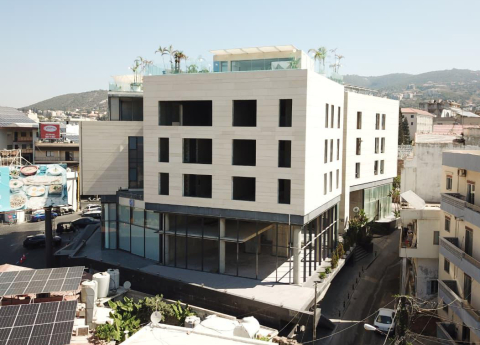
The project is strategically positioned at the junction of Batroun's commercial strip, the old city, and the coastline, acting as an urban node within a fragmented urban fabric. Its podium, ground-level retail, and articulated blocks mediate between different street perspectives and scales. The rooftop provides a panoramic view of the town, reinforcing the project's role as a central organizing node that ties together the surrounding urban fragments.
CONCEPT:
The project is located in Batroun, a major town along the coast that links the capital city Beirut to the Northern region of the country. Specifically, it sits at the junction of a new commercial strip, the historic old city, and the coastal road.
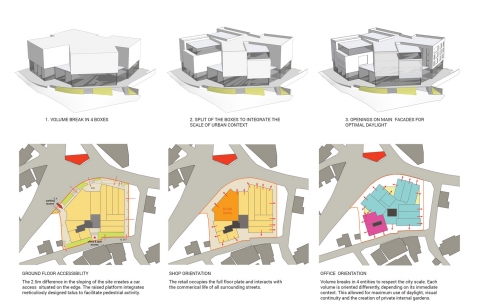
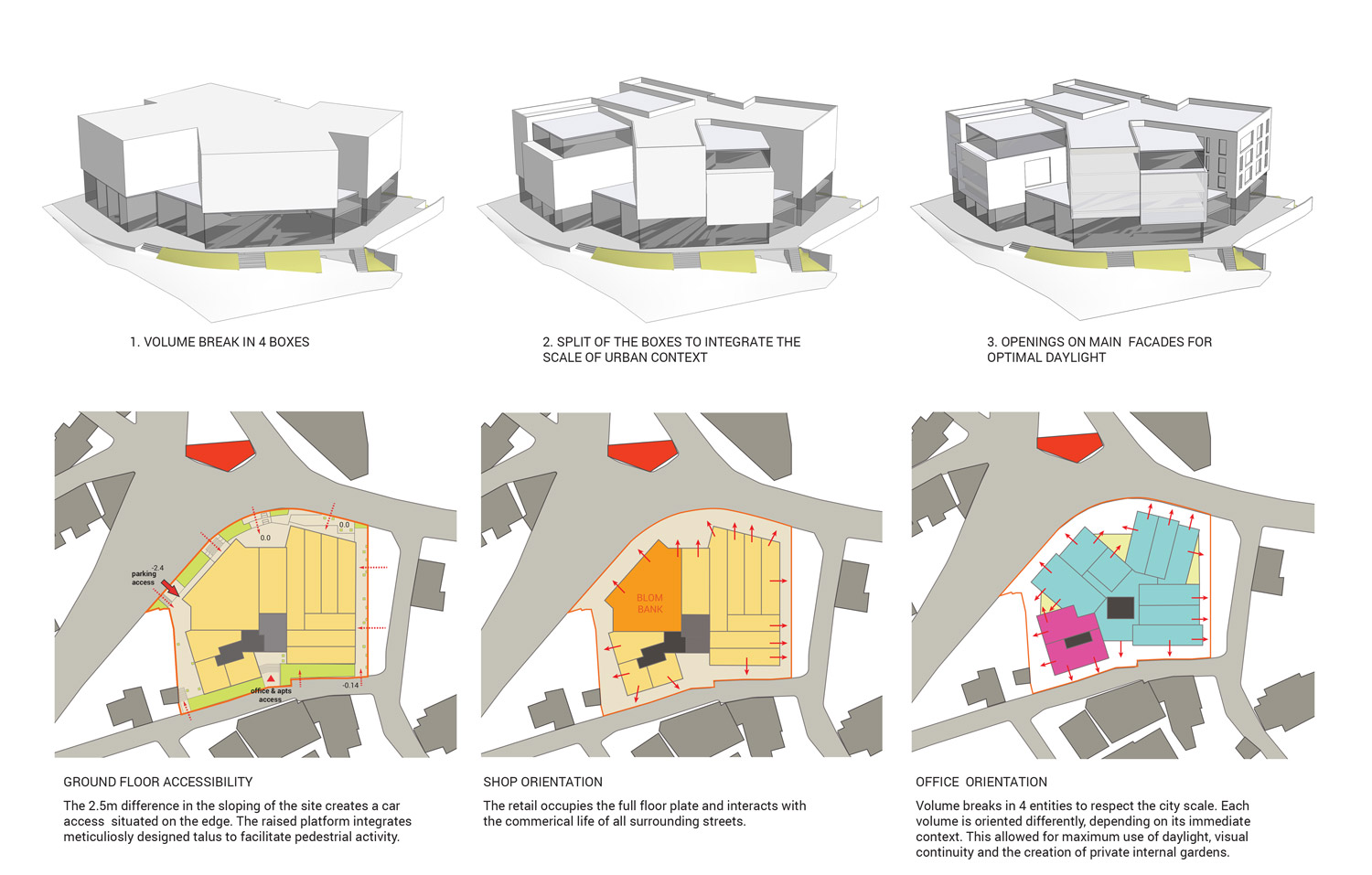
The design was guided by a strategy that attempts to unify opposite urban conditions. Bounded by four streets and facing an existing standalone structure, the project was conceived as a composition of multiple blocks, rising on a podium like a belvedere overlooking its context. Above the podium, the four blocks are oriented each towards a particular view. While the individual blocks feature different treatments according to their use and particular location, they nevertheless share the same modern language, like rhythmic compositions in dialogue with the city.
This 13,500 sqm mixed-use project features 11 retail units on the ground floor, along with three office blocks and one residential block on the upper levels. The ground floor and mezzanine occupy the full footprint of the site, accommodating retail units that offer maximal exposure to the streetscape. A flexible structural grid, shifting between the ground floor and upper floors, enables the dynamic rotation of the blocks, creating adaptable spaces that engage the surrounding areas. Each block is further subdivided to respond to the city scale, with a rooftop bar and pool framing views of the sea and mountains. The roof serves as an observatory platform, from which one could view the old city, reinforcing the project's presence as a civic landmark.
Acting as an urban node, the project operates as a connector between the commercial strip, the old city, and the coastline. While attempting to relate in scale to its complex and varied context, it does not play the game of imitating the traditional architecture, nor does it take the form of a bland office complex. By breaking down the whole project into multiple components, arranged as a cluster of forms in close relationship, and treating these blocks in nuanced ways, the project presents itself as a new and dynamic landmark that contributes positively to the town’s complex morphology.