


Al Hitteen Compound
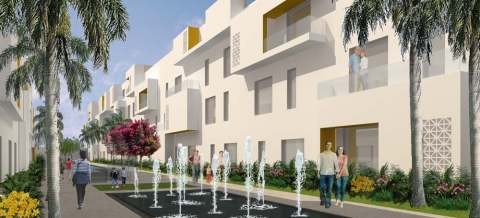
Al Hitteen Compound is a residential development in Riyadh conceived as an introverted environment that prioritizes privacy, climate response and communal living. Rather than opening toward its immediate surroundings, the building is organized around a landscaped internal courtyard that becomes the social and spatial heart of the project.
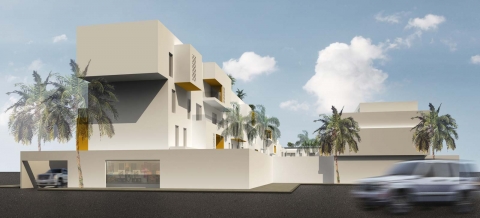
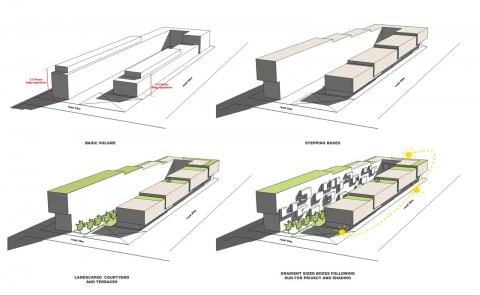
The massing is articulated through a series of stepped platforms that respond to local building-height regulations while creating terraces and outdoor spaces at different levels. Service areas, including kitchens and bathrooms, are positioned along the street-facing perimeter, allowing bedrooms and living spaces to open toward the protected internal landscape. The courtyard extends vertically through the development, with landscaped areas continuing toward the roof and accessible from the ground floor.
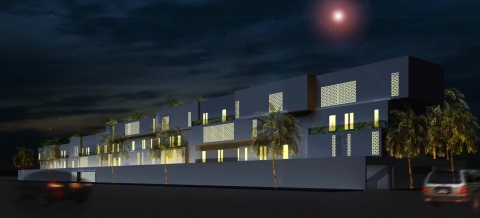
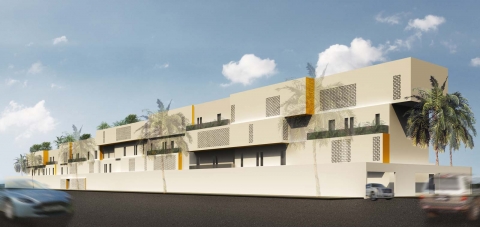
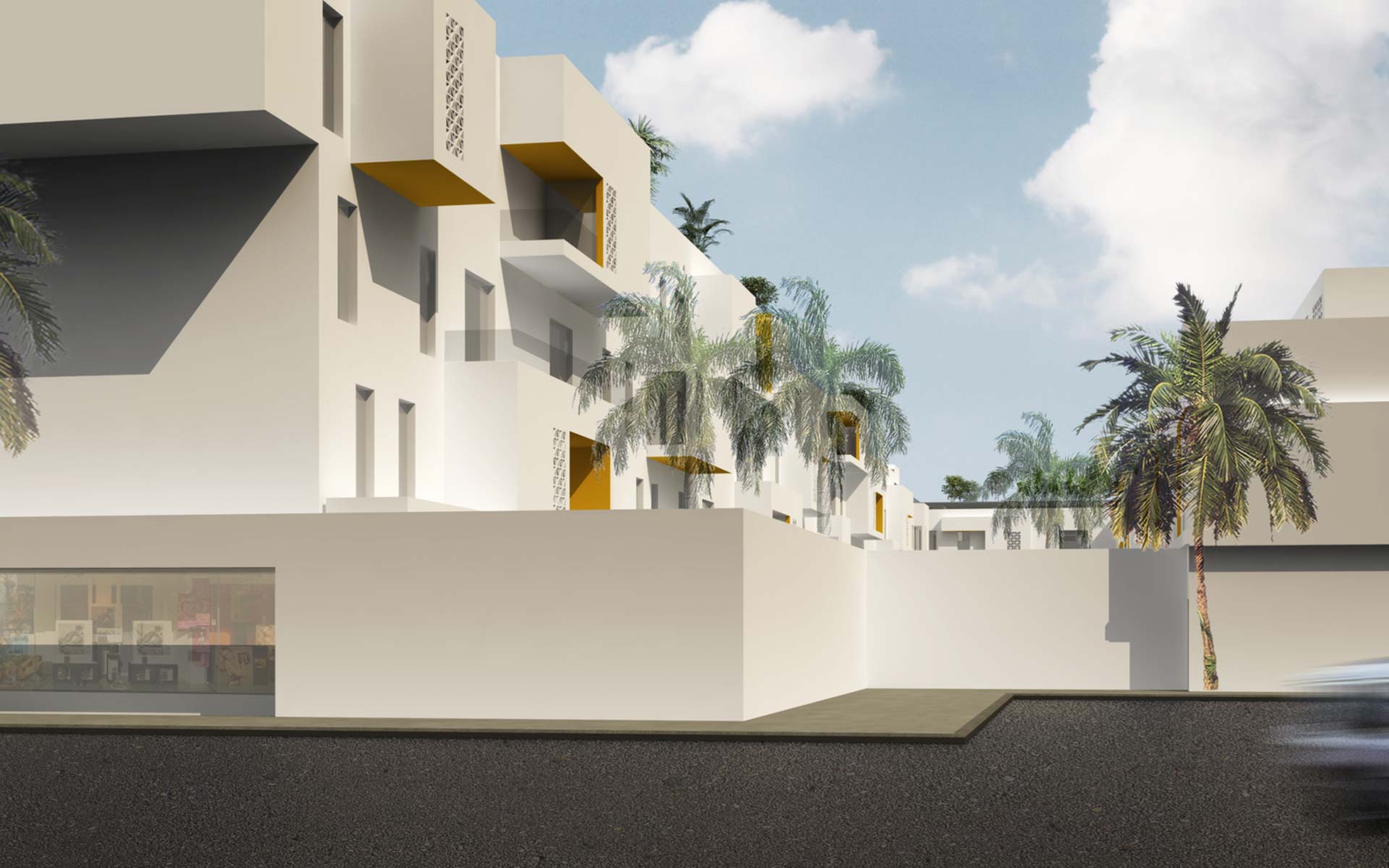
A composition of projecting box-like volumes gives the building its architectural identity. Along the street façades, these projections break down the scale of the development and create a dynamic interplay of solid and void. Facing the courtyard, the same strategy provides shade, privacy and individual outdoor spaces for the residences, transforming the façade into an active environmental layer rather than a purely visual treatment.
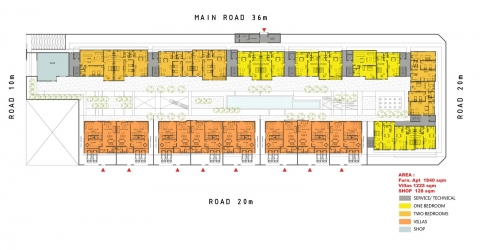
The development comprises 63 residential units organized into three typologies: one-bedroom apartments, two-bedroom apartments and villas. Shared amenities—including a gym, playroom, shop and multipurpose space—are located at basement level and receive natural daylight through an integrated courtyard.
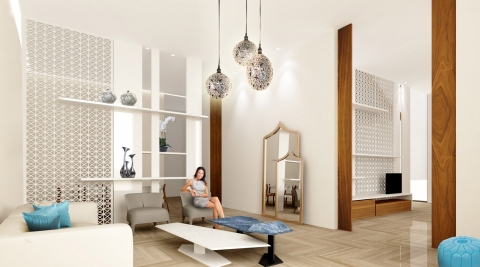
A restrained, light-toned material palette responds to Riyadh’s intense sunlight and desert environment, allowing the compound to sit quietly within its context while the internal landscape creates a more protected and intimate residential experience.